
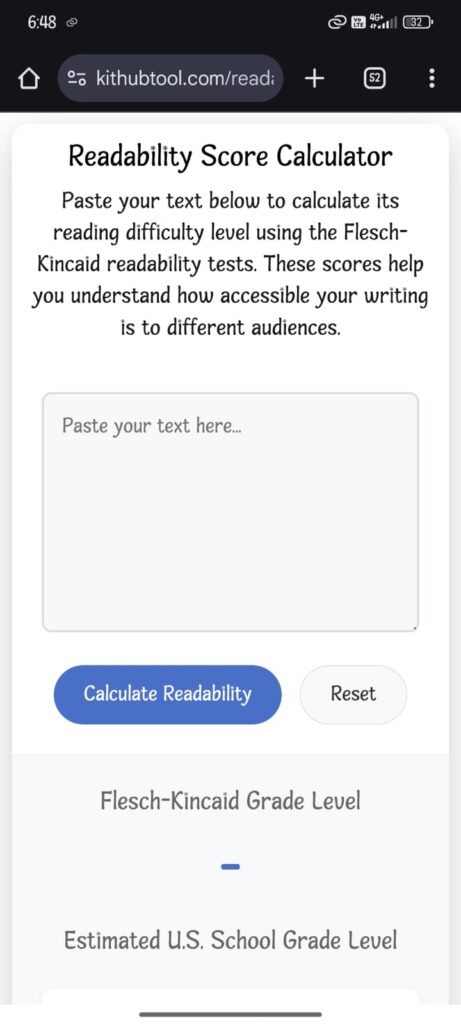
Readability Score Calculator
Paste your text below to calculate its reading difficulty level using the Flesch-Kincaid readability tests. These scores help you understand how accessible your writing is to different audiences.
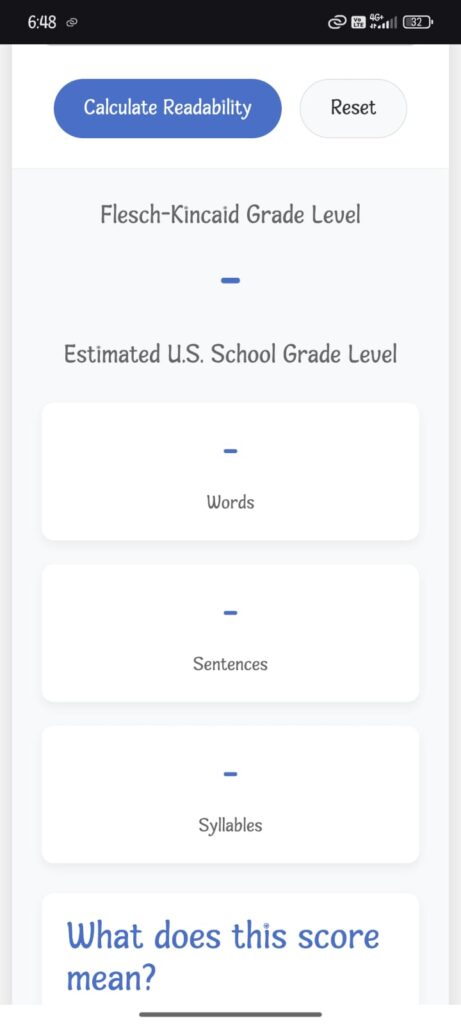
What does this score mean?
The Flesch-Kincaid Grade Level formula converts the readability score to a U.S. grade level. This makes it easier for teachers, parents, and librarians to assess the readability level of various books and texts.
Introduction
Our free Readability Score Calculator helps writers, educators, and content creators analyze text complexity using proven formulas like Flesch-Kincaid. Discover your content's reading level and learn how to make your writing more accessible to your target audience.
What is Readability Scoring?
Readability scores measure how easy or difficult your text is to understand. These scores use mathematical formulas that consider factors like sentence length, word complexity, and syllable count. The most widely recognized readability formulas include Flesch-Kincaid Grade Level and Flesch Reading Ease, which help determine the educational level required to comprehend your content.
Why Readability Matters for Your Content
Improving readability isn't just about simplifying language—it's about connecting with your audience effectively. Content with optimal readability scores achieves higher engagement, better comprehension, and improved conversion rates. Whether you're writing blog posts, academic papers, business documents, or marketing copy, understanding your readability score helps you tailor your message to your specific readers.
How Our Readability Calculator Works
Our tool analyzes your text using multiple proven readability formulas. Simply paste your content, and we'll calculate key metrics including word count, sentence count, syllables, and multiple readability scores. The Flesch-Kincaid Grade Level provides a U.S. school grade level, while the Flesch Reading Ease Score gives a 0-100 rating of text difficulty.
Understanding Your Readability
A lower grade level (like 6-8) indicates content is easily understood by most adults, making it ideal for web content and general audiences. Medium grade levels (9-12) suit high school students and general adult reading. Higher grade levels (13+) typically indicate academic or technical content suitable for specialized audiences.
Applications Across Industries
Content Marketing: Optimize blog posts and articles for maximum reader engagement and SEO performance. Education: Teachers can assess reading materials, while students can improve their writing assignments. Business Communication: Create clearer internal documents, reports, and customer-facing materials. Academic Writing: Ensure research papers and theses meet appropriate complexity standards.